
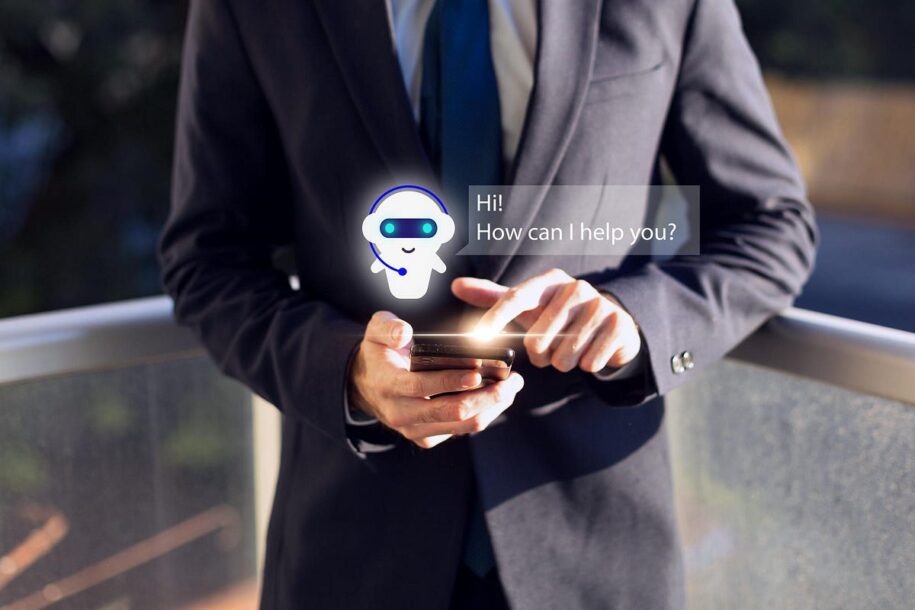
Artificial Intelligence is no longer an emerging trend; it is an operational reality in modern organisations. Yet, while many professionals experiment with AI tools, few truly understand how to integrate them strategically into their workflows. This is where AI Coaching becomes essential.
Rather than simply learning prompts or isolated tricks, AI coaching focuses on developing structured, responsible, and high-impact use of tools such as ChatGPT, Gemini, Claude, Microsoft Copilot, and Copilot Chat within real professional contexts.
What Is AI Coaching?
AI Coaching is a guided developmental process that helps individuals and teams integrate AI tools into their daily work in a strategic, ethical, and performance-oriented way.
It goes beyond tool demonstration. It combines:
- Technical enablement (how to use the tools effectively),
- Strategic alignment (where AI creates measurable value),
- Governance awareness (privacy, data protection, compliance),
- Capability building (developing prompting and AI literacy skills).
Why AI Coaching Matters
Research by McKinsey (2023) estimates that generative AI could automate or significantly augment a substantial proportion of knowledge work activities. However, many organisations struggle with:
Drawing on adult learning theory (Knowles, 1980) and technology adoption research (Venkatesh et al., 2003), AI coaching recognises that sustainable adoption requires not only access to tools but also confidence, contextual application, and structured experimentation.
- Low adoption rates,
- Misuse or overreliance on AI,
- Data security concerns,
- Lack of measurable ROI.
AI coaching addresses this gap by helping professionals move from experimentation to structured implementation.
When done well, AI coaching can lead to:
- Increased productivity in writing, analysis, and research,
- Improved decision support through AI-assisted synthesis,
- Better cross-functional collaboration,
- Reduced cognitive load in repetitive tasks,
- Stronger critical evaluation of AI outputs.
What Can AI Coaching Do for You?
1. Develop AI Literacy
Understanding how large language models work at a conceptual level helps professionals avoid common pitfalls such as hallucinations, bias, and overgeneralisation.
2. Master Prompt Design
AI coaching teaches structured prompting approaches, including constraints, role specification, iterative refinement, and evaluation criteria — essential for reliable outputs.
3. Integrate AI into Workflows
Rather than using AI as a standalone assistant, coaching helps embed tools like Copilot Chat or Gemini into document drafting, data analysis, meeting preparation, or strategic planning.
4. Strengthen Governance Awareness
Responsible AI use requires understanding data privacy, intellectual property, and organisational policies. Coaching ensures that efficiency never compromises compliance.
5. Build Strategic Thinking
The ultimate goal is not to replace human expertise but to amplify it. AI coaching strengthens human judgement, creativity, and leadership in AI-augmented environments.
Case Example: Using AI to Redesign a Business Process
A mid-level operations manager began experimenting with ChatGPT to draft reports. Through structured AI coaching, she expanded her approach:
- She used Gemini for comparative research synthesis.
- Copilot integrated insights directly into internal documents.
- Claude supported structured long-form reasoning tasks.
Within three months, she reduced report preparation time by 40%, improved communication clarity, and introduced AI-supported workflow documentation across her team.
The transformation did not come from the tools alone — it came from structured guidance in how to apply them strategically.
The Role of the Professional
AI coaching is collaborative. The individual must:
- Test prompts iteratively,
- Critically evaluate outputs,
- Adapt recommendations to context,
- Maintain ethical responsibility.
As Davenport and Ronanki (2018) note, AI initiatives succeed when humans remain actively engaged in oversight and decision-making.
5 Key Takeaways
AI coaching is not about learning a tool; it is about transforming how you work.
Structured guidance accelerates safe and effective adoption.
Prompting is a skill that can be developed.
Governance and compliance must accompany innovation.
AI, when strategically integrated, amplifies — not replaces — human expertise.
A Closing Thought
AI tools are powerful, but power without structure rarely leads to sustainable results. AI coaching provides that structure — enabling professionals to move from curiosity to capability, from experimentation to measurable impact.
In an era where AI is reshaping industries, learning how to work with it effectively may become one of the most important professional skills of our time.
References
Knowles, M. (1980). The Modern Practice of Adult Education. Cambridge Books.
Venkatesh, V., Morris, M. G., Davis, G. B., & Davis, F. D. (2003). User acceptance of information technology: Toward a unified view. MIS Quarterly, 27(3), 425–478.
Davenport, T. H., & Ronanki, R. (2018). Artificial intelligence for the real world. Harvard Business Review.
McKinsey & Company. (2023). The economic potential of generative AI.